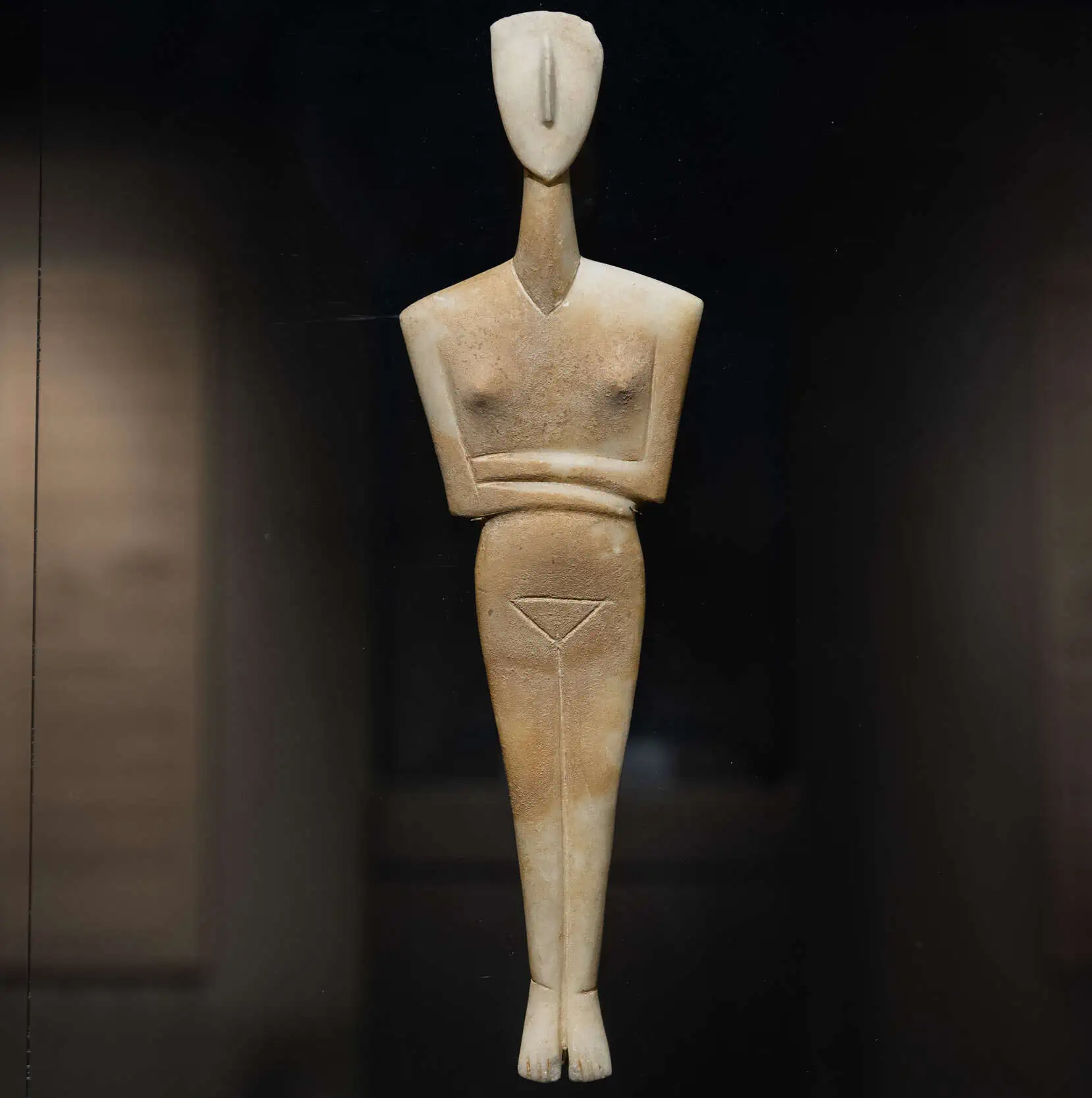
Cycladic Figurines
The collection features various marble statuettes characterized by folded arms and schematic facial features, made possible by the stone's predictable grain.
Observe the subtle curvature of the back and leg alignment.

When researching a carving class in Athens, beginners often consult a why is marble good for sculpting guide. For millennia, artisans have chosen this crystalline limestone to capture the human form, leaving an enduring legacy visible at 4 Neophytou Douka str.
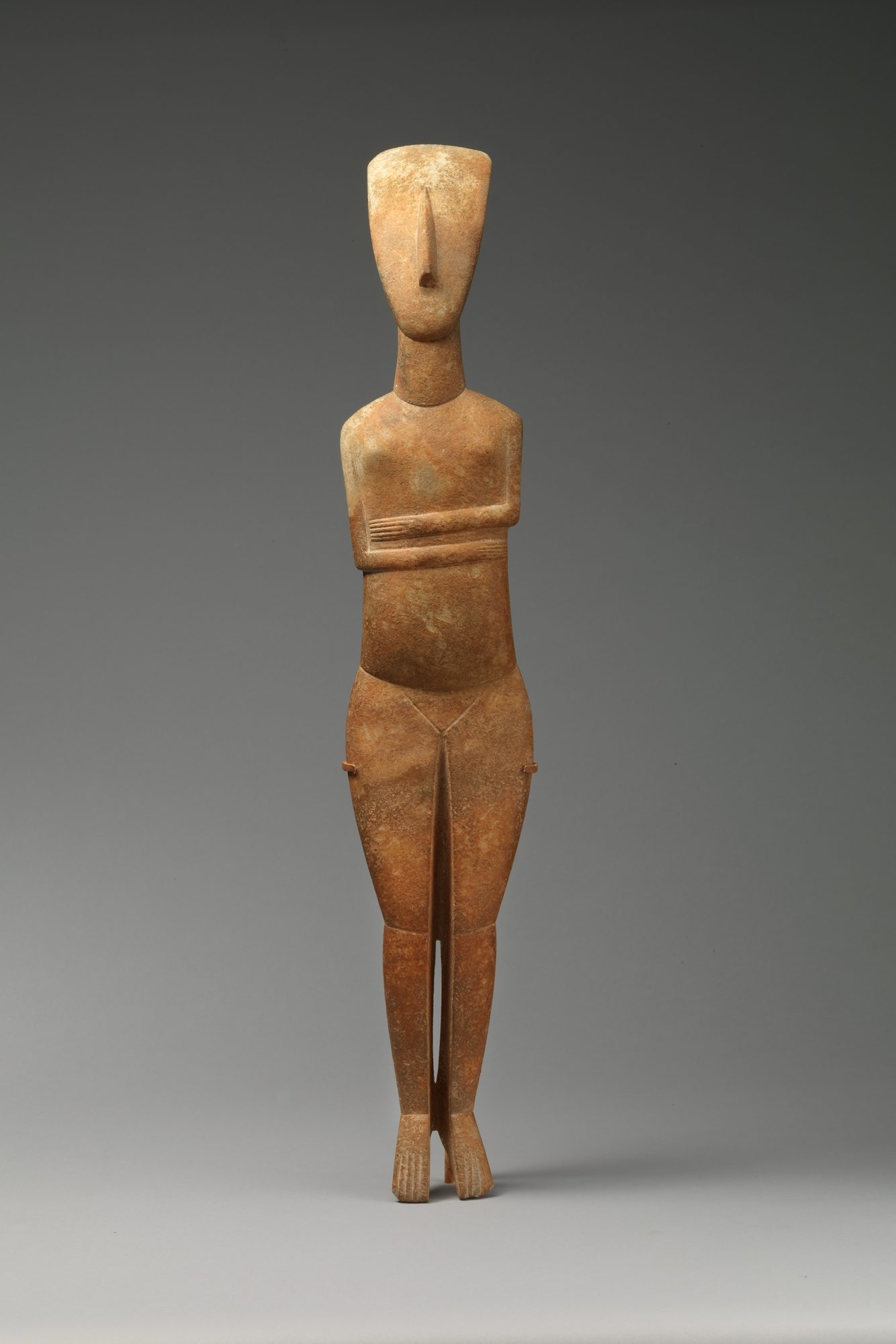
Quick answer
The material is ideal for carving because it possesses a slight surface translucency that mimics human skin. Combined with a relative softness when freshly quarried, the fine grain allows sculptors to execute delicate anatomical features using chisels and rasps before the stone hardens over time.
The Early Bronze Age artisans of the Aegean did not use iron tools to shape their iconic minimalist figures. Instead, they relied on emery abrasives sourced from the island of Naxos to grind down raw blocks of white stone. Anyone looking into ancient techniques eventually asks why is marble good for sculpting, especially when early craftsmen lacked hardened steel chisels. The answer lies in the stone’s internal structure. As a metamorphic rock derived from limestone, it consists of interlocking calcite crystals. This fine-grained texture provides consistent resistance in every direction, preventing the block from splitting unpredictably along harsh fault lines when struck. Such structural predictability was essential for creating the slender, geometric profiles that characterize Cycladic figurative art. The material’s behavior during the physical carving process further clarifies its historical dominance. When freshly extracted from underground Naxian quarries or Parian deposits, the stone retains a natural moisture that makes it relatively soft. Sculptors can rapidly remove large sections of waste material using a point chisel before refining the silhouette with a toothed claw tool. As the block is exposed to the open air over months and years, it gradually loses this internal moisture and hardens. This transition from a malleable state to a highly durable finished piece highlights the ideal properties for stone carving. The final surface can then be smoothed with pumice and sand, removing deep tool marks and preparing the figure for the painted details that originally adorned these ancient works. Beyond pure mechanics, the visual characteristics of the finished product explain the reasons behind classical statuary material choice. The densely packed calcite crystals allow light to penetrate several millimeters into the surface before scattering. This subsurface scattering effect yields a soft, waxy glow that closely resembles human skin, bringing cold stone to life. Today, visitors observing the permanent exhibitions in Athens can see how this gentle luminescence survived thousands of years of burial. Modern students participating in a local carving class quickly experience these same tactile and visual benefits firsthand. Understanding the balance between workability and luminous permanence fully answers why is marble good for sculpting, securing its place as the definitive medium of ancient Greek expression.
“The densely packed calcite crystals allow light to penetrate several millimeters into the surface, yielding a soft glow that brings cold stone to life.”
The technical properties of Naxian and Parian marble enabled Cycladic sculptors to create their signature minimalist aesthetic. These material characteristics provided the stability and fine-grained surface quality required for the precise, geometric forms defining their legacy.
The crystalline structure of marble allows light to penetrate the surface slightly, giving figures a soft, lifelike quality known as subsurface scattering. This effect is essential to the depth seen in Cycladic figurines.
Marble's uniform, compact grain allows for detailed carving without the stone fracturing easily. This texture enabled artists to achieve the sharp edges and flat planes characteristic of early Bronze Age art.
With a Mohs hardness of approximately 3, marble is soft enough to be shaped with copper or obsidian tools but durable enough to maintain structural integrity over millennia. This balance was critical for ancient Aegean craftspeople.
Being composed primarily of calcium carbonate, marble resists weathering and environmental degradation when preserved. This chemical stability is why many figurines have survived in near-pristine condition for over 4,000 years.
Marble accepts a fine polish, which allows for a smooth, matte finish that emphasizes the geometric abstraction of the sculpture. Artists could achieve subtle contours that highlight the sculptural form rather than decorative surface details.
The choice of high-quality island marble allowed artists to pursue a consistent style across different workshops. This material uniformity creates the cohesive visual language observed throughout the Museum of Cycladic Art collection.
The Museum of Cycladic Art houses a significant collection that demonstrates how the fine-grained Parian marble allowed early sculptors to achieve distinct minimalist forms. These works reveal how the stone's durability and smooth finish facilitate precise, intentional carving.
The collection features various marble statuettes characterized by folded arms and schematic facial features, made possible by the stone's predictable grain.
Observe the subtle curvature of the back and leg alignment.
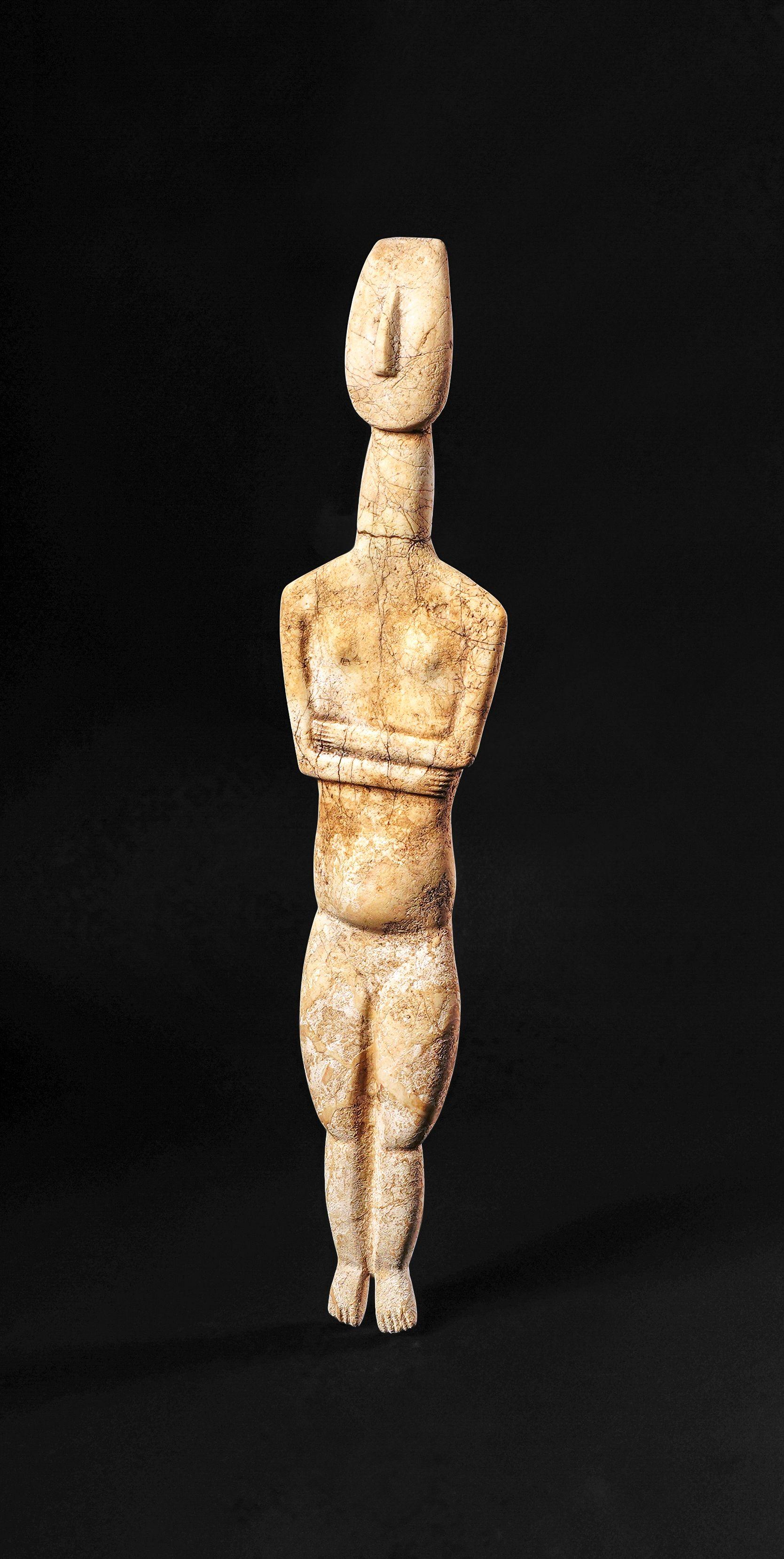
These figures exhibit more pronounced angularity, showcasing how marble retains sharp edges despite the passage of millennia.
Look closely at the incisions defining the legs and arms.
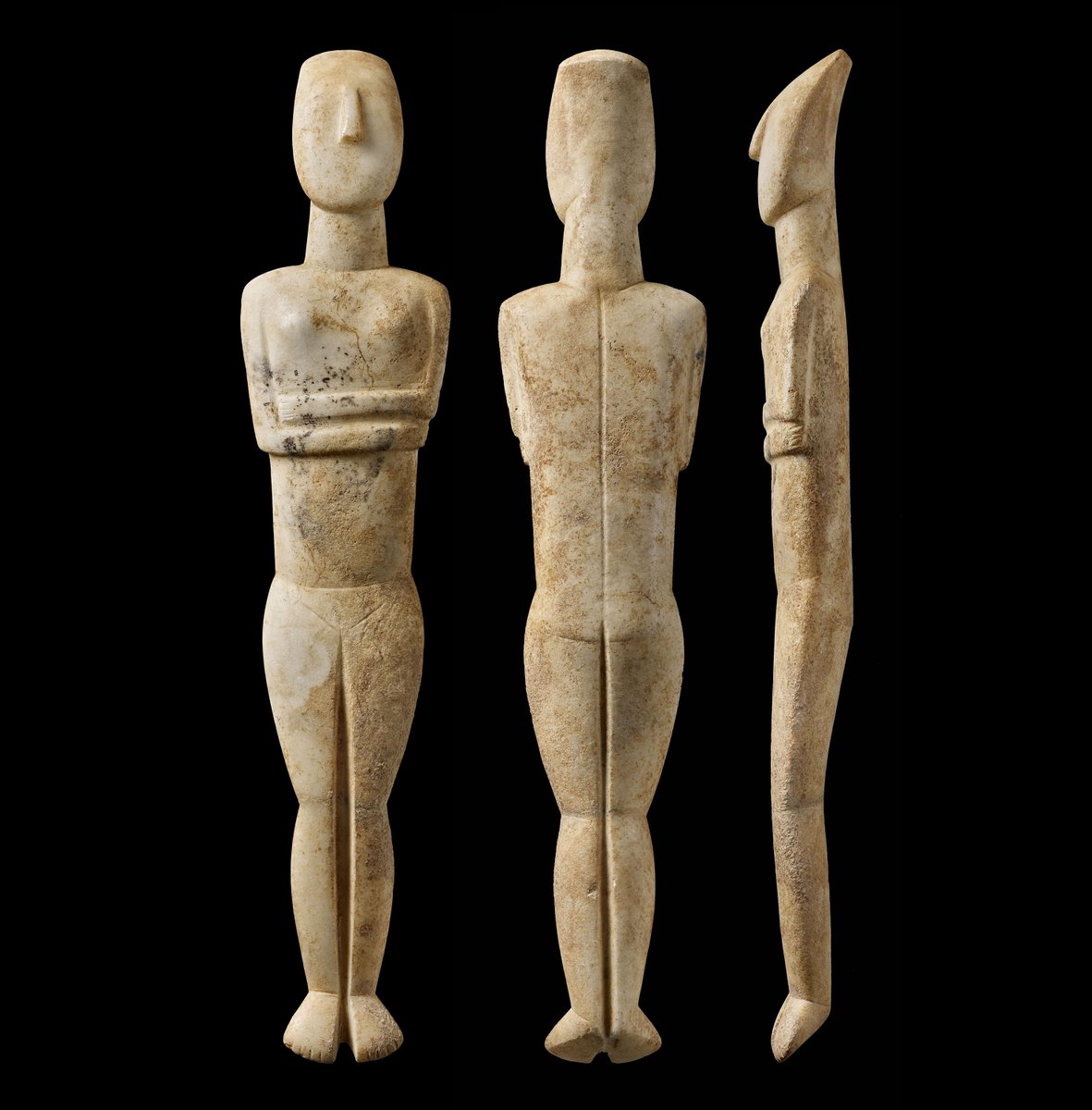
This type displays refined proportions and elegant, elongated forms that highlight the structural integrity of high-quality marble.
View from the side to see the slender profile.
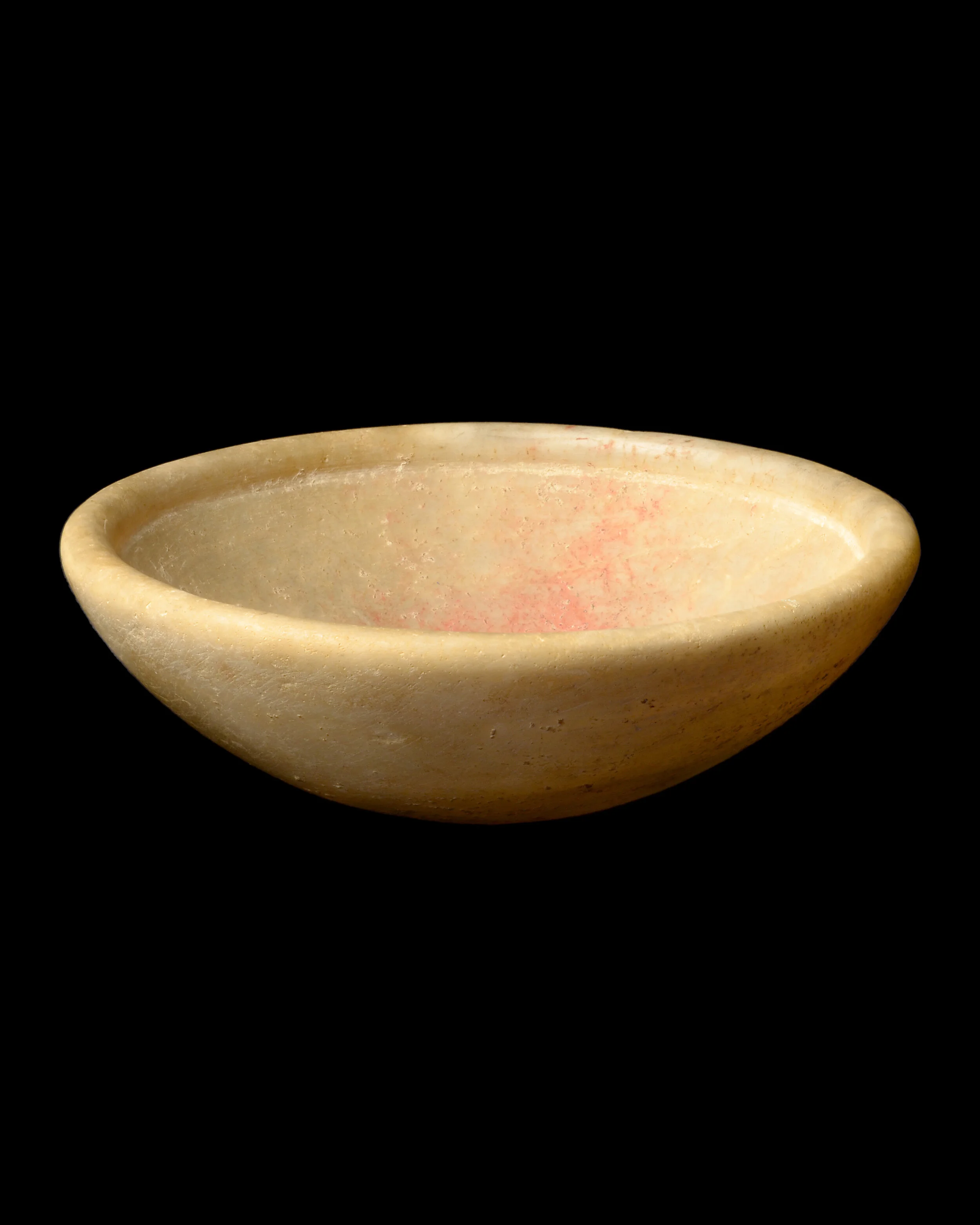
Beyond figurines, the museum displays marble bowls and jars that illustrate the material's suitability for thin-walled, hollowed-out vessels.
Notice the consistent wall thickness achieved through grinding.
The Museum of Cycladic Art maintains a consistent weekly schedule for visitors interested in exploring the artistic applications of marble.
To properly study why marble is suitable for sculpting, plan your arrival between 10:00–12:00. This window provides the quietest environment to observe the translucency and fine grain of the Cycladic figurines without the distraction of mid-day crowds.
—
These hours offer the most stable light conditions and space for detailed inspection of stone textures.
Mild, 15°C to 23°C
Spring weather is comfortable for walking to the museum and avoids the intense heat of summer.
Mild, 16°C to 22°C
Autumn provides clear, temperate conditions ideal for focusing on the permanent collections before winter.
Verdict: The best time to visit is Wednesday or Friday morning, arriving at 10:00 during the months of April, May, or October.
The Museum of Cycladic Art is located at 4 Neophytou Douka str., 106 74 Athens, Greece. It is situated in the Kolonaki district, accessible by public transport or a short walk from central landmarks.
Line 2 or 3 to Syntagma Station
Lines 022, 024, 025, 026, 032, 203, 204, 211, 224 to Rigillis Stop
Drop-off at Neophytou Douka street
Walking from Syntagma Square is the most direct approach for visitors arriving by metro. Use the museum's official contact at +30 210 722 8321 for specific vehicle access queries.
Everything you need to know about why is marble good for sculpting
Marble is favored for its crystalline structure, which allows for a soft, translucent finish that mimics human skin. This property, combined with its relative softness when freshly quarried, enables artists to achieve intricate detail in their works. Sculptors prize this lithic medium for its ability to hold fine edges and polish to a high luster.
The Museum of Cycladic Art features numerous artifacts that demonstrate these historical carving methods. Observing the ancient figurines provides direct insight into how artisans shaped the raw rock into iconic cultural symbols. You can explore the permanent collection to see these techniques in practice.
The way light penetrates the surface, known as translucency, gives carved figures a lifelike quality that was essential for early masterworks. This optical characteristic remains a primary reason why is marble good for sculpting throughout history. Artists intentionally utilized this effect to create depth and warmth in their compositions.
The museum does not offer hands-on stone carving lessons directly. However, visitors interested in the practical application of these skills can often find information on nearby workshops that teach traditional stone-shaping techniques. Check the museum website for any special lectures or guided exhibition tours regarding material history.
Its hardness and resistance to erosion ensure that monuments survive for millennia, making it a reliable choice for lasting commissions. This structural stability is a central reason why is marble good for sculpting for outdoor and indoor displays alike. Its capacity to withstand weather makes it an enduring material for public art.
Yes, the museum is open to the public with general admission. You can view the exhibits during standard operating hours to better understand the craftsmanship behind these ancient artifacts. Please consult the visitor information section to plan your trip effectively.